Street art – provocative, political, transformative, whole side of buildings street art – and gentrification have a strange symbiotic, almost parasitic, relationship. This often plays out in working class areas of cities with some rough edges and where property prices are more affordable. If you care about communities, and the people living in them, street art projects have become something of a harbinger of doom.
It is the vanguard of gentrification. The siren call for coffee shops, art galleries and trendy bars to colonize your neighbourhood. Urban renewal is generally a good thing, pulling in much needed investments and services, and I love street art. Yet, it’s hard to ignore how it has become the poster child for redevelopment that turns once thriving communities, into monocultures. A rainforest into a palm oil plantation.


It’s not clear if that will be the fate of Madrid’s Lavapiés area, but there is a lot of street art. It’s one of Madrid’s most diverse neighbourhoods, a working class area into which recent migrants settled. The mix of African, Asian and Latin American communities gives the area a unique cultural mix. Not long ago, it was neglected and parts were considered slums. No more. It’s an area that has been gentrifying for two or three decades.


I didn’t really pick up on the gentrification when we stayed in the area seven years ago, but on this trip it was clear and obvious. Tourism appears to be fast-tracking the process. It’s understandable, it is one of the most fascinating areas of the city to visit, as well as being really well located for some of Madrid’s major attractions. The added bonus is a blossoming street art scene and a fashion for Indian food.


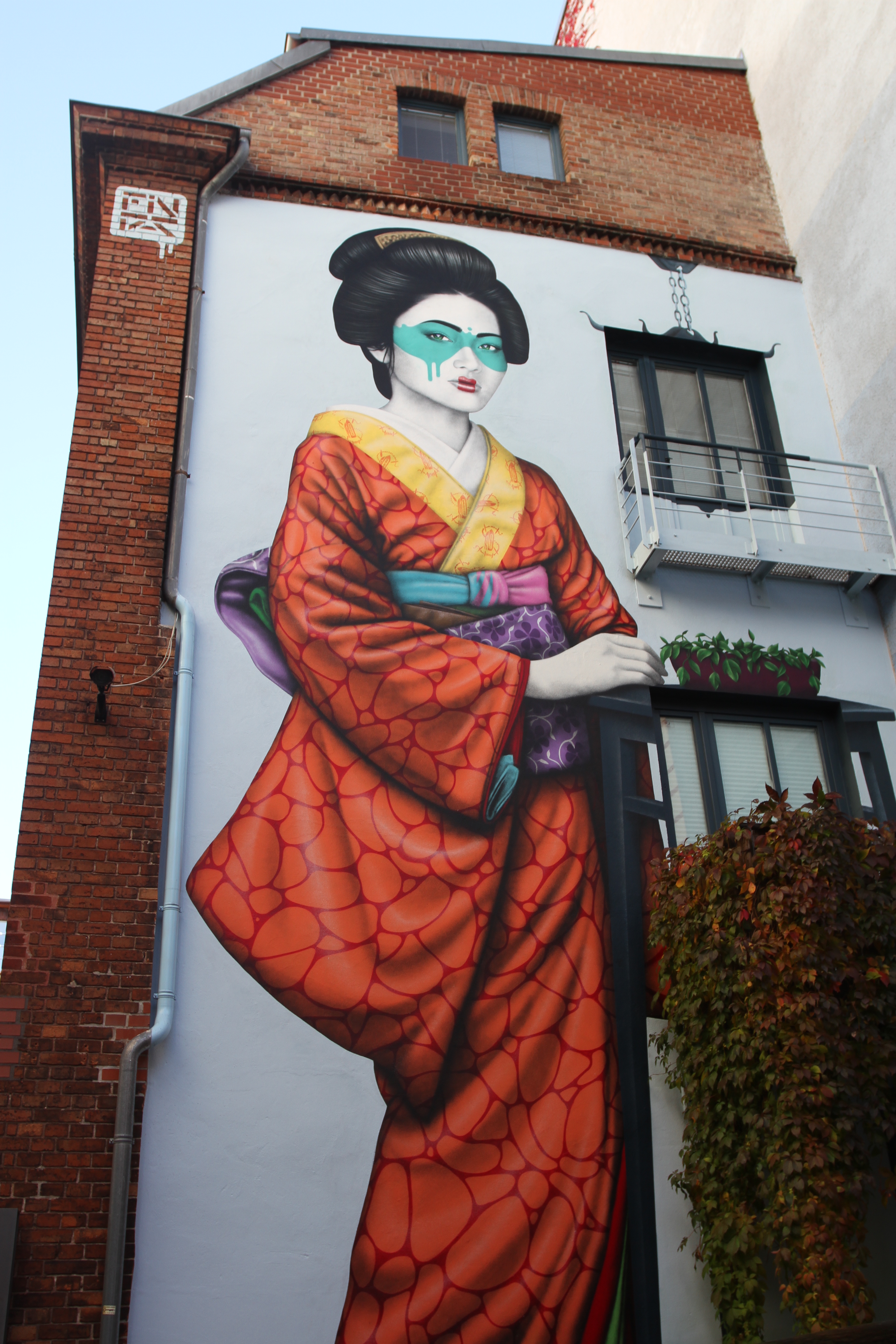
I didn’t intend to hunt out street art on this trip, it’s just hard to miss it as you wander the streets … and Madrid is a walkable city. As we made our way around the city, we spotted some familiar artists. The wonderful Isabelita by Irish artist Fin DAC on the side of the Mercado de San Fernando, instantly transported me back to Köpenicker Strasse in Berlin. Similarly, DFace’s work Run Away brought back his work Obey on Bülowstrasse.


There were lots of unfamiliar artists on display as well. I especially enjoyed seeing the disconcerting mashup of famous images transposed onto other famous images by artist Fiigueers: David Bowie’s head on the figure of Christ, Vivien Leigh’s shower scene in Psycho on Marilyn Monroe’s most famous scene in The Seven Year Itch. There was a great representation of Goya’s Execution of the Defenders near Príncipe Pío station.
While areas like Lavapiés are hot spots of street art, it can be found across the whole of Madrid. There is still a lot of ‘organic’ street art and rampant tagging, but much of the big street art is created by organised street art events, or commissioned by businesses (there’s a tradition of painted shop shutters). It makes for a city-wide collage that’s worth exploration, intentional or not.


Wonderful Paul. I’ll be forever grateful that you introduced me to Street Art a while back. Merci beaucoup cher ami.
It’s not quite Berlin, but Madrid is a very good city for street art should you ever venture that way, Brian!
Been there often in the 80’s both for work and pleasure… Might go back one of these days… Be good, Paul.